
How We Beat Apple, Google, and Amazon on Revenue Per Employee

We beat Apple, Google, and Amazon on one metric at AppSumo. Revenue per employee (RPE). How? We learned it the hard way.
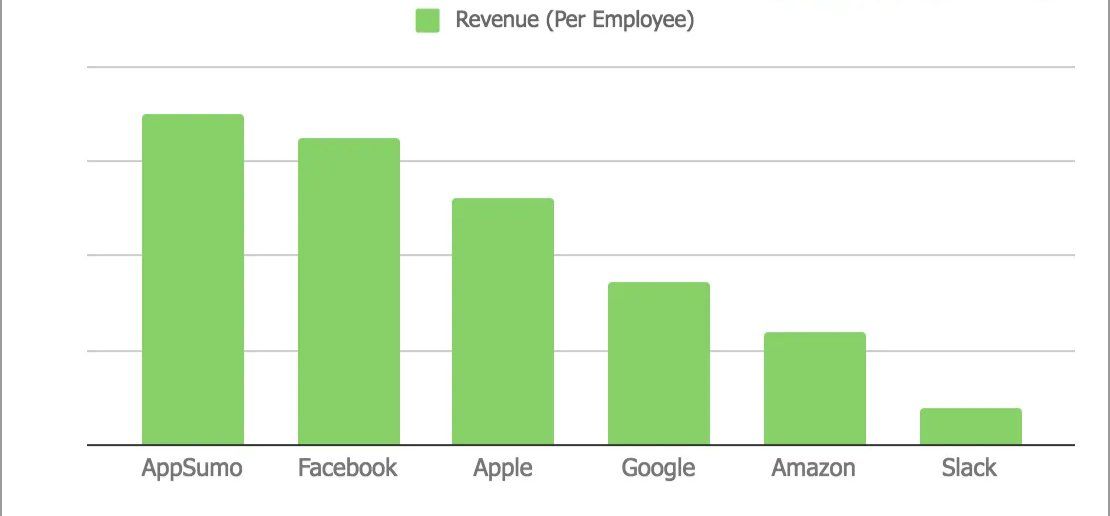
Table of Contents
Costly Mistake
Early on, we over-invested in engineering and design. Great intentions. Wrong timing.
Revenue stayed flat. Profits shrank. And suddenly we had less money to invest the following year.
The Problem
When I finally sat down with the P&L, the problem was obvious: We didn’t hire to unlock growth. We hired to make existing work more comfortable.
That’s a subtle but expensive mistake.
Adding headcount without removing a bottleneck doesn’t create leverage. It just spreads the same output across more people.
New Rule
That’s when RPE became non-negotiable. Every role had to do one of two things:
-
Bring in new customers
-
Retain the ones we already had
If a hire couldn’t clearly do one of those, it was a “not yet.” This approach became central to how we handled the most critical hire decisions.
Tracking Growth
From then on, we tracked RPE monthly. We tracked it by department.
And we stopped hiring to discover growth. We only hired to scale it. This mindset shift was essential for amplifying what works.
Key Takeaways
Revenue per employee is a powerful metric for building a lean, profitable company. Hire to unlock growth, not to make existing work more comfortable. Every role should either bring in new customers or retain the ones you already have.
When you stop hiring to discover growth and only hire to scale it, you create real leverage in your business.
Track your RPE monthly and by department to keep your team focused on what matters.